



Getting back on the road after a serious traffic violation can feel overwhelming. You may be required to file a specific form, known as an SR-22, with your local department of motor vehicles. This is a certificate of financial responsibility mandated by state law.
Maintaining continuous coverage is not just a suggestion—it’s a strict rule. If your policy lapses, your driving privileges can be suspended again. This makes finding the right coverage a critical step for drivers looking to move forward.
Your journey starts with understanding the unique regulations in your area. Every state has its own rules. This guide is designed to help you navigate the process of securing affordable options and meeting all legal requirements to regain your license.
Key Takeaways
- An SR22 is a state-required certificate proving you have the necessary auto insurance.
- You must keep your policy active without any gaps to avoid license suspension.
- Regulations vary significantly from one state to another.
- Finding cost-effective coverage is possible, even for high-risk drivers.
- The right provider will handle the filing paperwork for you.
- This process is a key step to legally restoring your driving privileges.
- Understanding your specific situation is the first move toward a solution.
Understanding SR22 Insurance
When the state mandates proof of financial responsibility, you’ll likely encounter the SR-22 form. This document is not a special type of insurance. It is a certificate that verifies your auto policy meets minimum liability coverage rules.
What is an SR22?
Think of it as a formal promise to the state. Your provider files this form after you buy a policy. It confirms you have the required protection on the road.
This requirement stays on your record for a set period. It is a legal obligation for the driver.
How SR22 Works with Your Auto Insurance
Your insurance company handles the filing with the DMV. They send the state your SR-22 certificate. This proves you carry the necessary coverage.
If your policy lapses, the provider must report it. This can lead to an immediate license suspension. Maintaining continuous coverage is therefore non-negotiable.
By keeping your policy active, you fulfill the financial responsibility mandate. You show the state you are a compliant motorist.
SR22 vs. FR-44: Key Differences
Not all certificates of financial responsibility are created equal. The FR-44 represents a higher tier of state-mandated proof.
Understanding which form applies to you is crucial for legal compliance.
When an FR-44 is Required
This specific filing is mandated only in Florida and Virginia. It follows serious driving offenses.
Common triggers include DUIs with a high blood alcohol concentration. Repeat traffic violations can also lead to this requirement.

Comparing Liability Coverage Limits
The major difference lies in the mandatory liability coverage. An FR-44 typically requires you to carry double the minimum limits.
This means a much larger financial responsibility. Your policy must meet these stricter state standards.
You must consult your provider to confirm which certificate you need. They handle the official filing with the DMV.
Why You Might Need an SR22
Certain serious traffic incidents trigger a specific state requirement for drivers. This mandate comes from a court or your local department of motor vehicles.
You will receive official notification if this applies to your situation. It is a legal step following major offenses.
Common Violations and Court Requirements
A judge or state agency typically orders this filing. It happens after convictions for severe violations.
Common reasons include a DUI or DWI. Reckless driving and operating a vehicle without valid coverage are also key triggers.
| Type of Violation | Typical State Action | Common Filing Requirement |
|---|---|---|
| DUI / DWI Conviction | License suspension, possible jail time | Mandatory certificate for 3-5 years |
| Reckless Driving | Fines, points on your record | Proof of high-risk policy |
| Driving Without Insurance | Fines, vehicle impoundment | Immediate proof of future coverage |
| Multiple At-Fault Accidents | License review, surcharges | Financial responsibility filing |
Accumulating too many tickets or accidents quickly can lead to this requirement. Even failure to pay child support may result in a mandate.
If you get a hardship license, you’ll likely need this form. It allows limited driving to work or school.
These actions prove you meet your financial duties. Your auto insurance provider handles the paperwork.
Obtaining Your SR22 Form Quickly
The fastest path to compliance begins with a direct call to your auto policy provider. Major companies have streamlined processes to help you get sr-22 documentation rapidly.
Contacting Your Insurance Provider
You must inform your provider immediately that you need sr-22 coverage. This starts the official filing clock.
For example, GEICO handles requests via phone or online chat. Progressive manages filings through their app or customer service line.
The General is known for a very quick online quote and policy finalization. This table shows contact options:
| Provider | Primary Contact Method | Key Feature for Speed |
|---|---|---|
| GEICO | Phone: (877) 206-0215 or Website Chat | Direct customer service line |
| Progressive | Phone: 1-866-749-7436 or Mobile App | App access for existing customers |
| The General | Online Quote System | ~2-minute quote, ~12-minute policy purchase |
Step-by-Step Filing Process
First, secure a valid car insurance quote. The certificate is tied directly to an active policy.
Your insurer then adds a special endorsement to your auto policy. They handle the electronic filing of the form with your state’s department motor vehicles.
Once submitted, you can legally drive again. Your provider manages the entire paperwork process for you.
Managing SR22 Costs and Fees
Understanding the additional expenses involved with state-mandated filings helps you plan ahead. Beyond the legal requirement, specific fees and potential rate increases affect your budget.
Understanding Filing Fees and Surcharges
Most states charge a one-time filing fee of around $25. This cost can vary based on your provider.
You typically pay this fee for each policy term while the requirement is active. If multiple people on your policy need a certificate, fees are charged separately.

Always ask for a clear breakdown of the filing fee and any surcharges. This avoids surprises when you purchase your new policy.
The Impact on Your Auto Insurance Rate
Insurers classify you as a higher risk after a serious violation. Your auto insurance rate will likely increase as a result.
The total cost of your coverage is influenced by several factors. Your ZIP code, vehicle type, and driving history all play a role.
Maintaining continuous auto insurance is crucial to avoid further penalties. Even with higher rates, it proves your liability coverage meets state rules.
SR22 for Non-Owner Drivers
Not owning a vehicle doesn’t exempt you from meeting state-mandated financial responsibility rules. You still need a valid solution to keep your license.
Exploring Non-Owner Car Insurance
A non-owner car insurance policy provides the answer. This special coverage offers liability coverage when you operate a vehicle you don’t own.
It fulfills the state requirement without being tied to a specific car. Once you buy this policy, your provider files the necessary form for you.
This ensures you remain a legal driver. Always check if your company offers this specific type of non-owner coverage.
Navigating Multi-State SR22 Requirements
Your driving record follows you, even when you cross state lines. A violation in one jurisdiction can create requirements in another. This scenario is common for many motorists.
You must navigate the rules of multiple state agencies. The key is to maintain compliance everywhere you drive.

Obtaining an SR22 in a Different State
If you received a ticket where you don’t live, your provider must be licensed there. You need a policy that meets that specific state’s minimums.
Major national companies can often handle these out-of-state filings. They submit the certificate directly to the correct department of motor vehicles.
Compliance with Various State Regulations
Rules differ significantly between states. Your coverage must satisfy the location of the original incident.
Failing to do so risks license suspension in multiple places. Always confirm your insurer is authorized for the necessary state paperwork.
| State Agency | Typical Contact Method | Multi-State Consideration |
|---|---|---|
| California DMV | Online portal, field offices | Requires CA-licensed insurer for in-state violations |
| Texas Department of Public Safety | Phone, mail-in forms | Accepts filings from many national providers |
| Florida Highway Safety & Motor Vehicles | Online system, certified mail | Has unique FR-44 requirement for serious offenses |
Consult your insurance agent to verify their capability. They manage the complex web of motor vehicles regulations for you.
Additional Tips for SR22 Insurance Coverage
Successfully managing your state-mandated filing involves more than just initial compliance. The real work begins after your provider submits the certificate. Your goal is to navigate this period smoothly and rebuild your standing.
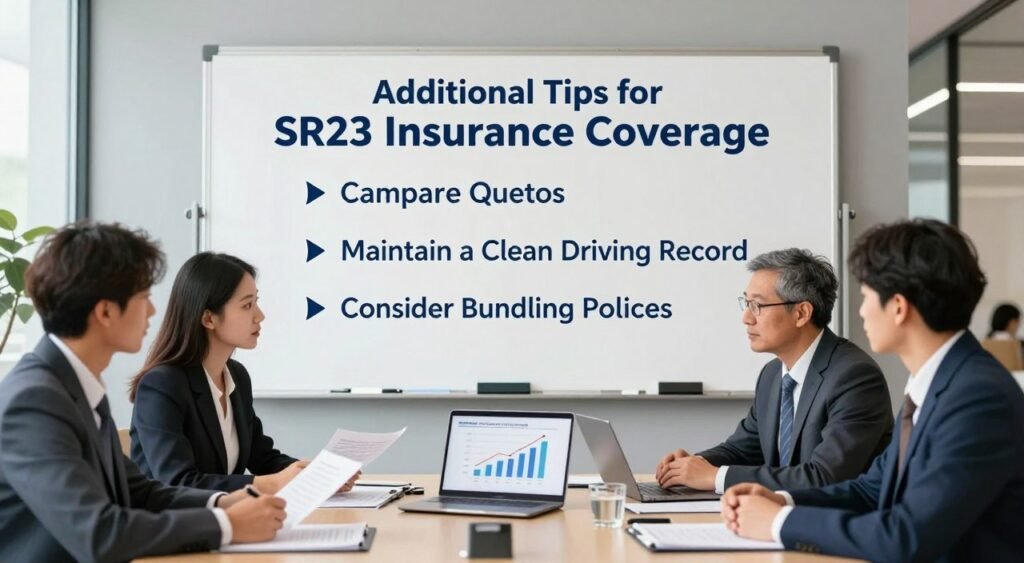
This phase requires diligent attention to detail. You must protect your driving privileges and work toward better rates.
Meeting Minimum Liability Requirements
Your policy must continuously meet your state’s minimum liability limits. This is a non-negotiable requirement for the entire filing period.
Most states mandate this proof of financial responsibility for three years. Any lapse in coverage triggers an automatic report to the state department of motor vehicles.
This report can suspend your license immediately. Always pay premiums on time to avoid this severe penalty.
Improving Your Driving Record and Rates
A clean driving record is your best tool for lowering future costs. Avoid all traffic citations and accidents during this sensitive period.
Consider completing a defensive driving course. While not always required, it demonstrates proactive improvement to your insurance provider.
Once the mandatory term ends, contact your agent to remove the filing from your policy. Keep your contact information current with both your insurer and the DMV to receive all official notices.
Conclusion
Moving forward from a state-mandated filing requirement is a significant step toward restoring your driving independence. Partnering with a reputable provider simplifies securing affordable SR-22 insurance. They handle the paperwork, allowing you to focus on maintaining your policy.
Remember, this certificate is just proof of financial responsibility. It does not permanently define you as a motorist. Always compare quotes to find competitive car insurance rates and minimize any filing fee.
Taking charge of your record today helps prevent future accidents. Stay informed about state rules and keep your coverage active. This ensures you meet all obligations and protect your license.
FAQ
What exactly is an SR-22 certificate?
How long do I typically need to maintain this filing?
What is the main difference between an SR-22 and an FR-44?
Can I get this form if I don’t own a vehicle?
What happens if I move to another state while my filing is active?
Will my premiums go up because of this requirement?
How quickly can my insurance company file the SR-22 form?
Post a comment
Related Posts

Find Affordable Insurance Quotes in the United States
Protecting your vehicle and your wallet is a top priority for every driver. Finding the…

Find Cheap Car Insurance Quotes Fast in the United States
Getting the right coverage for your vehicle doesn’t have to be a long, confusing process.…

Find the Best Auto Insurance Quote in the United States
Navigating the world of vehicle protection in the U.S. can feel overwhelming. With so many…
Compare Home Insurance Quotes for the Best Rates Today
Securing the right protection for your property begins with a simple, powerful step: comparison. To…