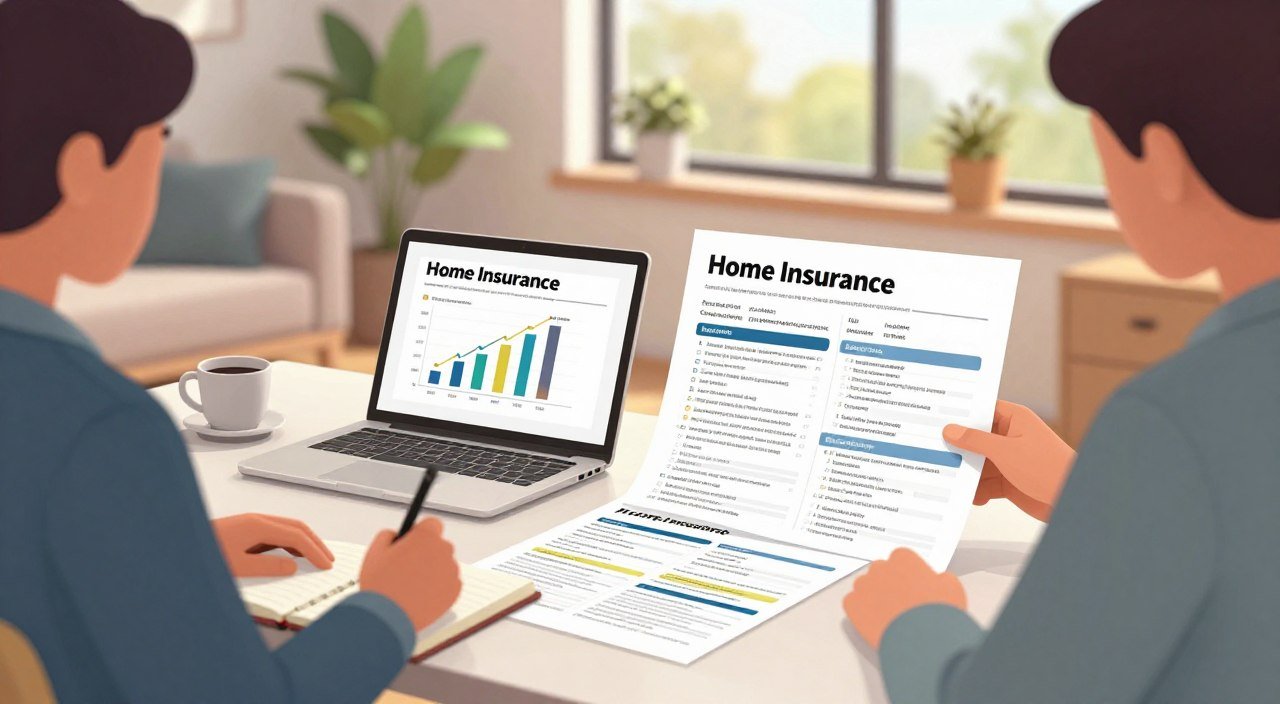



Securing the right protection for your property begins with a simple, powerful step: comparison. To find a policy that fits your budget and needs, you must evaluate offers from different providers.
Recent analysis gives us a clear picture of the market. NerdWallet examined pricing data from over 100 companies. Their research shows the average annual cost for this essential coverage is about $2,490 for many U.S. residents.
Why is getting multiple quotes so critical? Each major company uses its own proprietary model to assess risk and set your premium. The quote you receive from one can be very different from another.
Your specific rate isn’t just a number pulled from thin air. It depends on concrete details like the age of your dwelling and its location. These factors significantly influence the final price.
This guide is designed to help you navigate the evaluation process. Our goal is to empower you to find coverage that aligns with your financial and safety requirements. Taking time to research can lead to substantial savings, potentially hundreds of dollars every year.
Key Takeaways
- Comparing offers is the essential first step to finding the best policy for your property.
- The average annual cost for this type of coverage in the U.S. is approximately $2,490.
- You should get multiple quotes because insurers use different risk assessment models.
- Your final rate is heavily influenced by your house’s age and where it’s located.
- Using a structured guide can simplify the complex process of choosing coverage.
- Diligent research often results in saving a significant amount of money annually.
Overview of Home Insurance Quotes in the United States
Navigating the U.S. market for property protection starts with comprehending what these initial estimates truly represent. They are your gateway to finding a policy that fits your budget.
What Are Home Insurance Quotes?
A quote is an estimated premium a provider will charge you. It’s based on the specific risk profile of your dwelling and your personal history.
When you request one, you ask companies to evaluate your property. They check their internal data on claims and local rebuilding costs.
Current Market Trends
NerdWallet analyzed pricing data from over 100 homeowners insurance companies. This research provides key benchmarks for your potential annual cost.
Current trends show your premium is heavily influenced by regional risks. The frequency of natural disasters in your state plays a major role.
Market volatility means rates can shift rapidly. Reviewing your coverage options annually is vital to ensure you are not overpaying.
Key Factors Influencing Your Quote Estimate
| Factor | Description | Impact on Premium |
|---|---|---|
| Location | Your property’s state and neighborhood risk level. | High – areas with frequent storms or theft see higher costs. |
| Dwelling Age & Condition | The year your house was built and its current state. | Medium – newer, well-maintained homes often cost less to insure. |
| Claims History | Your past record of filing claims with any insurer. | High – a history of claims can significantly increase your rate. |
| Credit Score | Your financial responsibility score used by most providers. | Medium – a higher score typically leads to more favorable estimates. |
Understanding Your Coverage Needs for Home Insurance
Your journey to adequate safeguarding begins by thoroughly reviewing your current policy’s declarations page. This document outlines your existing protection levels and serves as the perfect baseline.
Accurate assessment prevents you from being underinsured after a major loss. It also helps you avoid paying for unnecessary extras.
Assessing Your Property and Personal Requirements
Start with your dwelling itself. Have you completed a kitchen remodel or added a new room? Such renovations increase your structure’s value and your coverage needs.
You must provide precise details about square footage and building materials. This data is crucial for calculating the correct amount of dwelling protection.

Next, evaluate your belongings. Create a simple inventory to estimate the replacement value of your personal items. This step ensures your possessions are fully covered.
Don’t forget other structures on your land. A new shed or swimming pool requires additional policy adjustments. Always verify your roof’s age and your electrical system type.
Home Assessment Checklist for Accurate Coverage
| Area to Review | Key Details to Gather | Why It Matters |
|---|---|---|
| Dwelling Structure | Renovation history, square footage, construction materials. | Sets the base for your dwelling coverage limit. |
| Personal Belongings | Inventory of high-value items, estimated total replacement cost. | Determines adequate personal property coverage. |
| Other Structures | Detached garage, shed, fence, or pool. | May require separate coverage limits. |
| Systems & Components | Roof age, electrical wiring type, plumbing material. | Impairs risk assessment and can affect premium. |
Exploring Top Insurance Providers and Their Offerings
To find a reliable partner for your property’s safety, you must investigate top-rated providers in the industry. Independent reviews offer a clear snapshot of a company’s performance.
Provider Reviews and Ratings
Third-party ratings are a crucial tool. Organizations like Bankrate analyze financial strength and customer satisfaction.
State Farm earned a 4.1 out of 5 rating in their latest analysis. Travelers and American Family both received a solid 4.0 score.

Progressive is another major player, currently holding a 3.7 rating. These scores indicate strong stability in the market.
Research how each insurer handles claims. A firm with a poor reputation for service can add stress during a disaster.
Some companies specialize in high-risk areas. Others focus on competitive rates for standard, low-risk properties.
Always read full reviews of the firms you consider. Ensure their specific policy features align with your long-term financial goals.
How Home Insurance Quotes Are Calculated
Your annual cost isn’t arbitrary; it’s calculated using specific data points about your dwelling and history. Providers weigh many factors to determine your premium.
Factors Impacting Your Rates
The age of your property is a primary consideration. Older structures often cost more to protect.
Your location heavily influences the final number. Areas prone to severe weather see higher prices.

Building materials and local rebuild costs are key. Labor and material prices this year directly affect your rate. The cost to rebuild is a primary driver.
Features like a swimming pool or trampoline add liability risk. These can increase your annual premium significantly.
The Role of Credit and Claims History
Your claims history is a major factor. Filing one or two claims in the past five years can raise costs today.
Maintaining a clean record is one of the most effective ways to keep expenses low over the long term.
In most states, your credit score is used to set prices. However, California, Maryland, and Massachusetts prohibit this practice by law.
Comparing “home insurance quotes”: A Step-By-Step Guide
A structured approach is your best tool for making a confident choice among different property protection offers. Experts suggest you gather three to five home insurance quotes to understand the real market cost for your policy.

Preparing Your Information
Accurate details are the foundation of a reliable estimate. Before you start, have your Social Security number and mortgage lender’s contact information ready.
First-time homeowners should also compile specifics about their dwelling. This includes recent renovation history and construction materials. Providing precise data ensures each insurance quote reflects your true situation.
Evaluating Quotes Objectively
Once you have your estimates, compare them fairly. Check that coverage limits and deductibles are similar for a true apples-to-apples price analysis.
You can collect quotes online, through a company agent, or via an independent broker. Always review the final documentation. Verify it matches the property details you submitted.
An independent agent can simplify this entire process. They help you decode complex policy language and compare home insurance and other insurance quotes from multiple providers.
Bundle Discounts and Multi-Policy Savings for Homeowners
One of the most effective ways to cut costs on property protection is through bundling discounts. This strategy involves purchasing more than one type of policy from the same company.

For example, SelectQuote customers save an average of $693 annually by combining their auto and home insurance. This multi-policy discount is a direct reward for your loyalty.
Maximizing Savings with Bundling
The best time to explore bundling is when shopping for new coverage or near your renewal date. You provide all your details once and receive a consolidated offer.
If you later cancel one policy in the bundle, you may lose the savings. Your remaining policy’s rate could increase. Always verify the terms with your provider.
Many firms offer extra incentives for loyal homeowners. These can include rewards for increasing your total coverage over time.
Checking for a multi-policy discount is a simple step. It requires little effort but can save significant money. This makes it one of the easiest discounts to claim.
Comparing Coverage Limits, Deductibles, and Policy Features
The true value of your safeguard becomes clear when you compare coverage limits against potential risks. These core components define your financial protection and out-of-pocket costs.

Dwelling Coverage vs. Personal Property
Your dwelling coverage must be enough to rebuild the structure from the ground up. This limit is based on local construction costs.
Personal property coverage pays to replace belongings like furniture and electronics. Your policy may value items on an actual cash value or replacement cost basis.
Personal Property Valuation Methods
| Valuation Type | How It Works | Impact on Claim Payout |
|---|---|---|
| Actual Cash Value (ACV) | Pays the item’s current value, minus depreciation. | You receive less money, often significantly below replacement cost. |
| Replacement Cost Value (RCV) | Pays the full cost to buy a new, similar item today. | You get a much higher payout, allowing for a full replacement. |
Understanding Deductibles and Extended Coverage
Your deductible is the amount you pay before the insurer covers a claim. For example, a $1,000 deductible on a $10,000 roof repair means the company pays $9,000.
Extended replacement cost coverage is a crucial feature. It can add an extra 25% to your dwelling limit if rebuilding costs exceed your policy.
Also review personal liability protection. It handles legal expenses if someone gets hurt on your property.
Always check for endorsements for high-value items like jewelry. These specific add-ons ensure full protection for your valuables.
Understanding Regional Rate Variations and Market Trends
The national average for property protection is just a starting point, as local conditions cause rates to diverge sharply. While the typical yearly cost sits around $2,490, your actual premium can be much higher or lower based on your address.
Impact of Location on Insurance Rates
Your state is a primary factor. Areas with frequent severe weather, like the Gulf Coast or Midwest, face elevated risks. This leads to pricier average home insurance for residents there.
Local details matter greatly. Insurers assess neighborhood crime statistics and proximity to fire stations. Being near a hydrant can lower your bill.
In places like Florida, the market struggles with hurricane risk. Many homeowners must use smaller, regional carriers or state-backed plans. Your quote may vary dramatically from the national figure.
Regional Premium Comparisons and Influencing Factors
| Region/State Example | Approximate Annual Premium | Primary Risk Drivers |
|---|---|---|
| Florida | $3,600+ | Hurricane exposure, severe weather frequency |
| Midwest (Tornado Alley) | $2,800+ | Tornado and hail risk |
| California | $1,300+ | Earthquake and wildfire threat |
| Northeast (Low-Risk Suburb) | $1,800+ | Lower natural disaster risk, strong fire protection |
Understanding how rates vary is crucial when relocating. It helps you budget accurately for total housing expenses in a new city.
Tips to Lower Your Home Insurance Premiums
You have more control over your policy’s cost than you might think. Implementing a few smart strategies can lead to meaningful savings on your annual bill.
Strategies for Cost Reduction
Consider raising your deductible. According to NerdWallet, increasing it from $1,000 to $2,500 lowers your average rate by about 9%.
Building a strong credit score is another proven method. Many providers use this history to set your annual premium.
Making your property safer also helps. Installing storm shutters or smart-home technology can qualify you for valuable discounts.
Review your policies regularly. You might drop coverage for items that have lost value over time.
Always ask your insurer about specific savings. Discounts for being retired, having a smoke-free dwelling, or using automatic payments are common.
Upgrading old plumbing or electrical systems reduces risk. This can lead to a lower insurance rate for your older home.
The Importance of Customer Service in Home Insurance
Beyond the price tag, the human element of your policy—how you’re treated during a claim—defines its real value. High-quality support is vital when disaster strikes. You want a firm that provides clear guidance and empathy during a stressful event.
Tools like Bankrate Scores help you evaluate providers. They rate companies on a 0.0 to 5.0 scale. This score reflects their commitment to customer service, financial strength, and digital tool availability.
Consider your preferences for interaction. Do you prefer 24/7 phone service? Or is managing your policy through a mobile app more convenient? The ease of doing business matters greatly.
When a claim arises, efficient service makes a significant difference. It can determine how quickly repairs begin and your life returns to normal. Some homeowners prioritize firms with excellent reputations, even if the premium is slightly higher.
Researching a company’s reputation before you buy is crucial. It ensures you have the support needed most during a crisis. This due diligence protects your investment and your peace of mind.
Expert Insights and Tools for Home Insurance Comparisons
Expert tools and professional advice can transform your search for the right property protection. This section explores how to use online calculators and agent guidance effectively.
Leveraging Online Calculators
Online tools provide a quick way to estimate costs. They help you budget, even if the price isn’t final.
Use these calculators to begin your research. They give a clearer picture of what your policy might cost.
Accessing Licensed Agent Advice
Licensed agents offer expert advice. They simplify comparing offers from multiple carriers.
Independent agents work with many firms. This provides a wide range of quotes. Be mindful of potential commission-based upselling.
Shannon Martin, a Bankrate Insurance Analyst, notes a common pitfall.
Simple paperwork mishaps regarding mortgage companies often lead to policy cancellations.
Always confirm your mortgage lender’s details are current. This avoids billing errors or escrow issues.
Conclusion
Making a final choice about your property’s protection is a significant step toward long-term security. Comparing home insurance quotes remains the most effective method to secure favorable rates and coverage.
Evaluate details like your deductible and available discounts. This helps you build a policy that safeguards your financial assets properly.
Remember, the average cost can differ by state. It’s wise to shop around after major life events.
Whether you use independent agents or online tools, researching companies finds you a reliable partner. Always keep your mortgage lender informed during the process.
This prevents billing errors and keeps your policy active. The right plan offers peace of mind, knowing your belongings are shielded from unexpected disasters.
FAQ
What exactly is a homeowners insurance quote?
What are the biggest factors that determine my premium?
How can I get the best price on my policy?
What’s the difference between dwelling coverage and personal property protection?
Why do rates vary so much by state and even ZIP code?
How important is customer service when choosing a provider?
Are online comparison tools and calculators reliable?
What should I do if my premium increases at renewal time?
Post a comment
Related Posts

Find Affordable Insurance Quotes in the United States
Protecting your vehicle and your wallet is a top priority for every driver. Finding the…

Find Cheap Car Insurance Quotes Fast in the United States
Getting the right coverage for your vehicle doesn’t have to be a long, confusing process.…

Find the Best Auto Insurance Quote in the United States
Navigating the world of vehicle protection in the U.S. can feel overwhelming. With so many…

Affordable Homeowners Insurance Options in the United States
Protecting your most valuable asset doesn’t have to break the bank. Finding the right plan…