


Running a small company involves many risks every single day. From customer interactions to daily operations, unexpected events can threaten your financial stability. Protecting your enterprise is not just wise—it’s essential for survival.
A general liability insurance policy provides a foundational shield. It helps cover costs if your company is held responsible for property damage or bodily injury. This type of protection is crucial for contractors, retailers, and service providers alike.
Understanding your coverage options is key. For direct help, the GEICO Insurance Agency can be reached at (866) 509-9444. They operate Monday through Friday from 8:00 AM to 10:00 PM ET and Saturday from 9:00 AM to 5:30 PM ET.
Our guide breaks down how this critical safeguard works. You’ll learn how it defends your assets from costly claims and legal challenges. Let’s explore how to secure your venture’s future.
Key Takeaways
- Liability protection is a critical step for any small business owner in today’s market.
- A general liability policy forms a basic layer of defense against common operational risks.
- Knowing the details of your coverage helps secure assets and ensure long-term financial health.
- The right policy is vital for navigating modern legal issues, whether you’re a contractor or shop owner.
- This guide offers clear insights into how coverage functions to protect against unexpected claims.
- Proper safeguarding helps manage litigation expenses that could otherwise harm your company.
What is Liability Insurance and Why Your Business Needs It?
Protecting your company’s finances starts with understanding foundational safeguards. This type of policy is a core part of a smart risk management plan.
Defining Liability Insurance
Liability insurance is a policy that shields your venture from claims arising during normal operations. It covers costs if you’re held responsible for incidents like customer injuries or property damage.
General liability insurance specifically handles these common risks. This includes medical payments for bodily harm and repairs for damaged property.
Below is a table outlining key reasons your enterprise needs this protection.
| Reason | Impact | Example |
|---|---|---|
| Lawsuit Protection | Shields finances from legal costs and settlements | A customer slip-and-fall injury claim |
| Client & Partner Trust | Demonstrates professionalism and reliability | Clients require a certificate of coverage |
| Contract Requirements | Enables bidding on larger, more profitable projects | Many government contracts mandate it |
| Legal Compliance | Meets state or local regulatory mandates | Operating permits often require proof |
Importance for Small Businesses
For a small operation, a single lawsuit can be devastating. The financial impact could threaten your very survival.
Having this coverage builds crucial trust. It shows clients and partners you are serious and prepared.
Many owners find it’s a prerequisite for securing major contracts or necessary permits. Various states also have regulations requiring specific protection to operate legally.
Key Components of General Liability Insurance
Two main coverage areas form the backbone of a standard general liability insurance plan. Knowing what each part does helps you see how your venture is shielded.
These components work together to handle common risks. They keep your operations running smoothly when unexpected events occur.
Property Damage Coverage
This part of your policy steps in if your work accidentally harms a client’s physical assets. It pays for repairs or replacement costs.
For example, a contractor might cause property damage by accidentally breaking a window. The coverage handles the bill so you don’t pay out of pocket.
Bodily Injury and Medical Expenses
If a customer slips and gets hurt at your shop, this component is vital. It provides financial support for their medical expenses.
It also covers related legal fees if a claim is made. This protection is crucial for any business open to the public.
Your capital stays safe, even during a difficult legal situation.
Exploring Liability Insurance Coverage Options
Not all risk management plans are created equal. The level of protection you choose can define your company’s resilience.
You have options ranging from simple, foundational policies to more extensive safety nets. Understanding the spectrum helps you match your unique exposures.
Basic vs. Comprehensive Policies
Basic plans typically address standard risks. These include bodily injury and property damage scenarios.
They form the core shield many small ventures start with. A general liability insurance policy often serves this role.
Comprehensive options go much further. They may include broader protections for complex operations.
This can cover areas like product liability or completed operations. Such expanded coverage mitigates risks in high-traffic service environments.
Your choice depends on your specific risk profile and operational scale. Evaluate your needs to see if a standard plan suffices.
| Feature | Basic Policy | Comprehensive Policy |
|---|---|---|
| Core Protection | Bodily injury, property damage | Includes core plus additional safeguards |
| Risk Scope | Standard operational exposures | Expanded for complex activities |
| Typical Cost | Generally lower premium | Higher premium due to broader coverage |
| Ideal For | Small businesses with low exposure | Businesses with higher risk or contract needs |
Consulting a licensed insurance expert helps decide the appropriate level for your situation. They can assess if a basic liability insurance policy is enough or if you need more.
How Liability Insurance Protects US Small Businesses
Imagine a simple accident at your workplace spiraling into a financial nightmare. Seeing how coverage works in real life clarifies its immense value.

Real World Scenarios and Examples
Consider a restaurant owner. A delivery driver slips on a wet floor and breaks an arm.
The owner could face a $75,000 lawsuit. This covers medical costs, lost wages, and personal suffering.
Without a general liability insurance policy, the owner pays personally. These significant legal and medical bills threaten the venture’s survival.
This insurance acts as a financial safety net. It handles the claim so your operations continue smoothly.
Protecting your assets from such events is key. It ensures you serve customers without the threat of immediate ruin.
Essential General Liability Policy Features
Beyond covering physical accidents, your policy’s essential features tackle legal and reputational risks. These components form a complete shield for your daily operations.
Legal Defense and Claims Coverage
If a lawsuit arises, your general liability insurance provides crucial support. It covers attorney costs, court fees, and settlement expenses.
This means you have the resources to hire skilled legal counsel. Your venture can mount a proper defense without draining its capital.
Advertising and Personal Injury Protection
Your marketing efforts carry their own risks. A liability insurance policy often includes protection for advertising injury.
This covers claims like defamation, copyright infringement, or misleading ads. It also handles personal injury claims not involving physical harm.
These features protect your company’s reputation and rights. They ensure a robust defense against both tangible and intangible threats.
Customizing Your Liability Insurance Policy
Think of your policy as a suit—it should be tailored to fit your company’s specific shape and size. A standard plan offers good protection, but your unique operations may need precise adjustments.

This process ensures your financial shield matches your real-world exposures. You can add special features and set appropriate coverage levels.
Adding Endorsements for Enhanced Coverage
Endorsements are add-ons that address gaps in a basic general liability insurance policy. They let you bolster your safeguard against distinct threats.
For instance, a retail shop might add cyber liability protection. This helps manage costs from a data breach or digital attack.
Contractors often choose tools and equipment endorsements. This covers their valuable assets while working at various job sites.
Tailoring Policy Limits to Your Business Needs
Your coverage limits define the maximum payout your policy provides. Setting them correctly is crucial for solid financial defense.
A small home-based consultancy has different business needs than a bustling restaurant. Your limits should reflect your venture’s size, revenue, and risk level.
Partner with your provider to review these details regularly. As your company grows, your policy can evolve to offer continuous, robust protection.
Industry-Specific Considerations for Business Liability Insurance
Different industries face unique operational hazards that demand specific protective measures. The right coverage must address the particular risks your sector encounters every day.
Understanding these nuances helps you build a stronger financial shield. It ensures your safeguard matches your real-world exposure.
Considerations for Contractors and Freelancers
Independent workers and contractors often operate on client property. This creates distinct risks like accidental damage to a home or workspace.
A tailored general liability insurance policy is crucial here. It should cover tools, equipment, and potential property harm from your work.
Retail, Hospitality, and Service Sectors
Businesses with high customer traffic face different challenges. Slip-and-fall accidents are a major concern for shops, restaurants, and hotels.
Service providers need protection for advice or work quality claims. The right insurance addresses these professional exposure points.
| Industry Sector | Primary Risk Exposure | Recommended Coverage Focus |
|---|---|---|
| Contractors & Freelancers | Property damage at job sites | Tools/equipment endorsement, completed operations |
| Retail & Hospitality | Customer bodily injury (slips, falls) | Premises liability, medical payments |
| Service Sector | Errors in professional advice or work | Professional liability insurance endorsement |
No matter your field, proper coverage is a fundamental requirement. It maintains your professional standing and legal compliance.
Professional Liability vs. General Liability: What You Need to Know
Your venture faces risks from both physical accidents and professional advice. Understanding two key policy types is essential for solid financial defense.
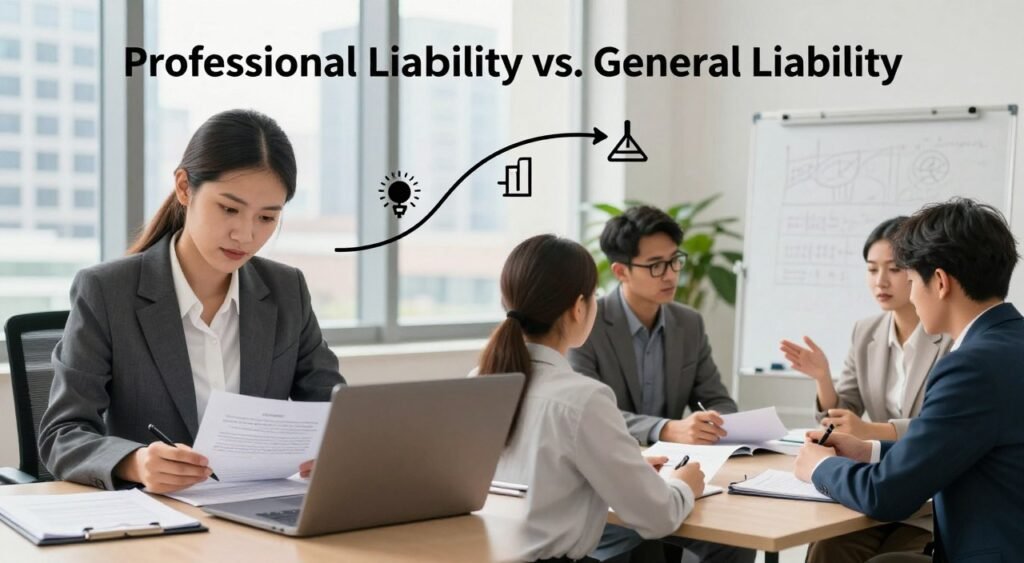
Professional liability insurance, often called Errors and Omissions, covers claims of negligence in your services. It addresses risks tied to the quality of your expert work.
In contrast, a general liability insurance policy handles physical incidents like customer injuries. These are distinct forms of protection for your company.
When to Combine Coverage Types
Many businesses choose to combine both coverage types. This ensures protection against physical accidents and professional service errors.
For instance, a hair stylist’s business might need professional liability if a client sues over a botched cut. Their general policy would cover a slip-and-fall in the salon.
Understanding this difference is vital for a comprehensive risk management strategy. It helps you build a complete shield for your operations.
Comparing General Liability Insurance with a Business Owners Policy (BOP)
A key decision for any entrepreneur is selecting between a bundled policy and a standalone plan. Understanding these options helps you secure the right financial shield.
Coverage Differences Explained
A Business Owners Policy (BOP) is a convenient 2-in-1 solution. It packages general liability insurance with property and equipment protection.
This bundle often includes business interruption coverage. That helps pay for wages and repairs if a fire shuts your office.
A standalone liability insurance policy focuses only on third-party claims. It does not cover your physical assets.
Cost Implications and Savings
Evaluating costs is a smart way to manage your annual budget. A BOP can offer savings by bundling coverages.
If your venture doesn’t own significant property, a standalone policy may be more cost-effective. You avoid paying for unnecessary protections.
Comparing these options lets you identify potential savings. You align your coverage with your specific operational needs.
| Feature | Business Owners Policy (BOP) | Standalone General Liability |
|---|---|---|
| Primary Coverage | Liability + Property/Business Interruption | Third-party liability only |
| Ideal For | Businesses with physical assets & location | Service-based or home-based operations |
| Typical Cost Implication | Often a bundled discount | Lower premium if no property risk |
Factors Influencing Liability Insurance Costs
The price you pay for safeguarding your company isn’t random. It’s shaped by specific, measurable factors.
Knowing these elements helps you budget accurately. You can also identify ways to manage your annual premiums.

Business Size, Type, and Risk Factors
Your team’s size directly affects your policy’s price. More employees typically mean a higher chance of claims.
The nature of your work is equally important. Some professions carry inherent risks that insurers carefully evaluate.
A construction firm faces different exposures than a quiet consultancy. Your premium reflects this risk assessment.
Location and Industry Impacts
Where you operate matters a great deal. Local regulations and lawsuit trends vary by state and city.
Certain sectors, like hospitality or contracting, are seen as higher risk. This can lead to increased costs for your essential coverage.
Market conditions in your region also play a role. Dense urban areas often have different pricing than rural locations.
| Cost Factor | How It Influences Premium | Example |
|---|---|---|
| Industry Risk | Higher-risk trades lead to higher premiums | A roofing contractor vs. a bookkeeper |
| Business Location | Local laws and claim frequency affect rates | Operating in a major city vs. a small town |
| Number of Employees | More staff increases potential for incidents | A solo freelancer vs. a 20-person team |
Understanding these drivers prepares you for the financial commitment. You can seek the right general liability insurance policy for your needs.
How to Get a Liability Insurance Quote Online
In today’s digital age, obtaining a protective quote for your venture is faster than ever. The online process is designed for your convenience, letting you evaluate essential coverage from anywhere.
Step-by-Step Quoting Process
Getting a quote begins on a provider’s website. You simply enter basic details about your operations.
The system then gathers this information to narrow the search for your best options. Many providers, like biBerk, let you buy a general liability insurance policy entirely online.
This streamlined approach helps you save valuable time. It also avoids extra broker fees.
Information You Need to Provide
To receive an accurate estimate, have your details ready. You’ll typically share your industry, business location, and employee count.
Providing correct information is crucial. It ensures the insurer can tailor the liability insurance coverage to your specific needs.
With this data, you can secure a policy in just a few clicks. It’s a smart first step toward solid financial defense.
Success Stories: Liability Insurance in Action
Real-world examples demonstrate how a safety net transforms crisis into continuity. These stories highlight the practical value of having robust coverage.
Testimonials from Small Business Owners
Many entrepreneurs share how their liability insurance provided crucial support. One shop owner noted, “Knowing my assets were protected let me sleep at night.”
This peace of mind is backed by decades of industry experience. The Berkshire Hathaway Insurance Group, with over 75 years in operation, has paid out $52.2 billion to policyholders.

Real Claim Examples and Outcomes
Consider a café facing a customer injury lawsuit. A timely general liability insurance payout covered legal fees and settlement costs.
This allowed the owner to focus on growth instead of litigation. Such outcomes show how a single claim can determine a business’s survival.
Having the right safeguard turns a potential disaster into a manageable situation. It ensures your operations continue smoothly after an incident.
Common Misconceptions About Liability Insurance
Many business owners operate under false assumptions about their financial safeguards. Clearing up these myths is vital for your company’s security.
Frequently asked questions often reveal gaps in understanding. Let’s set the record straight on what your policy truly does.
Debunking Popular Myths
A major myth is that one policy covers every lawsuit. This is simply not true for most operations.
Your general liability insurance won’t cover professional service errors. It also excludes internal employee lawsuits.
Another dangerous belief is using a personal auto plan for business driving. This can leave you completely unprotected.
Clarifying Policy Limitations
Every contract has specific exclusions you must know. Reading the fine print prevents surprise denials later.
Your protection has clear boundaries around what incidents are included. Understanding these limits is a key part of risk management.
| Common Myth | Reality | Impact |
|---|---|---|
| “It covers all lawsuits.” | Covers specific third-party bodily injury and property damage. | Gap in protection for professional errors. |
| “My personal auto insurance works for business.” | Most exclude commercial use entirely. | Potential for massive out-of-pocket costs. |
| “General liability insurance covers employee injuries.” | Worker’s compensation is needed for that. | Legal penalties and uncovered claims. |
Always review your documents with a licensed agent. They can explain where your coverage begins and ends.
Maximizing Financial Security with Liability Insurance Cover
The cornerstone of sustainable growth is a proactive plan to shield your assets from legal threats. Consistent liability insurance cover forms a critical part of this long-term strategy.

Long-Term Business Benefits
Maintaining this safeguard boosts your credibility with clients and partners. Many require proof of coverage before signing major contracts.
Investing in a reliable general liability insurance policy builds a stable foundation for expansion. It manages unforeseen costs that could otherwise stall your progress.
Choosing a provider with competitive rates and dependable support further solidifies your financial position. Your business gains resilience against economic shifts and operational accidents.
This ongoing commitment to protection is an investment in your venture’s future stability and peace of mind.
Understanding the Claims Process for Liability Insurance
When an unexpected incident occurs, knowing how to navigate the claims process can make all the difference for your company’s recovery. Acting quickly and correctly protects your financial health.
This knowledge ensures you can secure the support your policy provides. It turns a stressful event into a manageable procedure.
Steps for Filing a Claim
Your first move is to contact your provider right away. Report all details of the incident promptly.
Provide clear facts about what happened. Include the date, location, and people involved.
Your insurer will guide you through their specific forms. Prompt reporting helps speed up the entire review.
What to Expect During a Claim Process
An adjuster will investigate the facts to determine coverage. They assess the situation based on your policy terms.
You should gather supporting documents. Photos of property damage or medical reports are often required.
Being prepared with evidence minimizes delays. It helps the adjuster evaluate your general liability insurance claim efficiently.
| Stage | Action Required | Typical Timeline |
|---|---|---|
| Initial Reporting | Contact insurer with incident details | Within 24-48 hours |
| Investigation | Adjuster reviews facts & coverage | Several days to a few weeks |
| Documentation | Submit photos, reports, statements | As requested during investigation |
| Resolution | Claim approved, denied, or settled | Varies by complexity |
Understanding this flow helps you manage expectations. Your proactive approach supports a smoother outcome for your venture.
Conclusion
Your journey toward a secure business future culminates in making informed decisions about protection.
Securing your venture with a comprehensive liability insurance policy is a pivotal step. Understanding the nuances of general liability insurance helps shield your assets and ensures long-term success.
Remember, this coverage is not merely an expense. It is a strategic investment in your company’s stability and professional reputation.
We encourage you to review your current safeguards and consult with experts. Taking these proactive measures today provides the peace of mind to focus on growth.
FAQ
What exactly does a general liability policy cover for my company?
How much does this type of financial protection typically cost for a small operation?
What’s the difference between general and professional liability coverage?
Is a Business Owner’s Policy (BOP) a better choice for me?
What information do I need to get an online quote?
Can I customize my policy to fit my specific needs?
What happens if a client files a claim against my business?
Do I still need this if I work from home or as a freelancer?
Post a comment
Related Posts

Find Affordable Insurance Quotes in the United States
Protecting your vehicle and your wallet is a top priority for every driver. Finding the…

Find Cheap Car Insurance Quotes Fast in the United States
Getting the right coverage for your vehicle doesn’t have to be a long, confusing process.…

Find the Best Auto Insurance Quote in the United States
Navigating the world of vehicle protection in the U.S. can feel overwhelming. With so many…
Compare Home Insurance Quotes for the Best Rates Today
Securing the right protection for your property begins with a simple, powerful step: comparison. To…